Cooling towers are designed to run for years under demanding operating conditions, but like any critical asset, they eventually show signs that something isn’t right. The challenge is catching those signs before they turn into a costly outage.
Too often, facilities keep running through declining performance because the changes happen gradually: more vibration, a slight drop in cooling efficiency, a few repairs here and there. On their own, these issues may not seem urgent. Together, they often point to larger problems developing inside the tower.
Knowing what to watch for helps maintenance teams catch issues early, reduce downtime, and extend the life of their equipment.
1. It’s Louder Than It Used to Be
Why is my cooling tower making unusual noise or vibration?
Cooling towers aren’t silent, but they should sound consistent. New rattling, grinding, or vibration is usually a sign that mechanical components deserve a closer look.
Fan assemblies, gearboxes, bearings, and motors naturally wear over time. Left unchecked, minor mechanical issues can escalate into major failures that take an entire cooling cell offline.
2. You’re Losing More Water Than Normal
What causes excessive water loss or drift in a cooling tower?
Excessive drift isn’t just wasted water. Well-designed drift eliminators are built to hold water loss to a small fraction of a percent of the circulating flow rate, so a noticeable increase usually points to worn eliminators or internal damage affecting tower performance.
Beyond added water treatment costs, excessive drift can create housekeeping and safety concerns around the tower. More visible moisture or water escaping during operation is worth investigating before the problem grows.
3. Scale and Corrosion Are Becoming More Noticeable
Some buildup is expected in every cooling tower. Heavy scaling, rust, or corrosion is another story.
Mineral deposits reduce heat transfer, while corrosion slowly weakens structural components and mechanical equipment. Inspections often catch these issues long before they create operational problems, giving facilities the chance to make planned repairs instead of emergency ones.
4. Water Isn’t Flowing Evenly
What does uneven water distribution mean for cooling tower performance?
Cooling towers rely on uniform water distribution to operate efficiently. When portions of the fill stay dry while other areas are overloaded, overall cooling performance suffers.
Blocked nozzles, damaged piping, or worn distribution systems are common culprits, and fortunately, they’re also issues that can often be corrected before they affect production.
5. Process Temperatures Are Creeping Higher
Sometimes the first sign of cooling tower trouble doesn’t come from the tower at all; it comes from the process. When equipment runs warmer than expected or operators struggle to hold design temperatures, the cooling tower may no longer be performing at its intended capacity.
The root cause isn’t always obvious. Fouled fill media, restricted airflow, mechanical wear, and poor water distribution can all contribute to declining thermal performance. Even small mechanical clearances matter: a gap of roughly an inch between a fan blade tip and its cylinder is enough to measurably cut a tower’s total thermal capacity.
6. Fans and Motors Aren’t Operating Smoothly
What does it mean when a cooling tower fan motor overheats?
The fan system does the heavy lifting inside a cooling tower. When motors overheat, fans struggle to reach operating speed, or electrical loads climb, maintenance usually can’t wait much longer.
Addressing these issues early often prevents much larger repairs down the road.
7. Structural Components Are Starting to Show Their Age
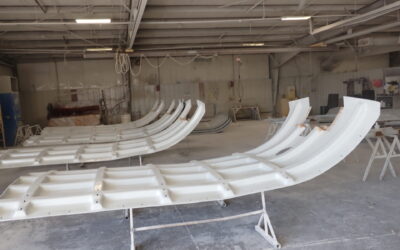
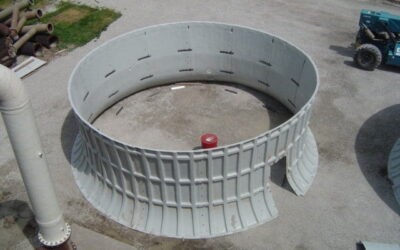
Fiberglass reinforced plastic (FRP) is known for its durability, but years of exposure to weather, chemicals, and continuous operation eventually take a toll.
Cracks, delamination, loose panels, and structural deterioration shouldn’t be dismissed as cosmetic. Left unaddressed, they can affect both performance and safety.
MCT stocks and fabricates many FRP replacement components in-house, which helps shorten lead times when repairs are needed.
8. Biological Growth Is Becoming Harder to Control
Cooling towers naturally create conditions where algae, bacteria, and biofilm can thrive if water treatment isn’t properly managed.
Beyond affecting heat transfer, biological growth can contribute to corrosion, plugged distribution systems, and added maintenance throughout the tower. Routine inspections help identify these conditions before they become more difficult, and more expensive, to address.
9. The Same Repairs Keep Coming Back
When maintenance teams find themselves repairing the same component over and over, it’s often a sign the real problem hasn’t been identified.
Recurring leaks, repeated gearbox issues, or ongoing mechanical adjustments may point to larger structural or operational concerns. A comprehensive inspection can often uncover the root cause and break the cycle of temporary fixes.
10. It’s Been Years Since the Tower Received a Thorough Inspection
How often should a cooling tower be inspected?
Perhaps the biggest warning sign is simply time. Many cooling towers keep running despite hidden deterioration that isn’t visible during day-to-day operation. Internal framing, fill media, and mechanical systems can all degrade gradually without creating immediate operational issues.
Routine inspections give facilities a clearer picture of equipment health and the chance to schedule repairs before they become emergency projects.
Don’t Wait Until a Small Problem Becomes a Major Outage
Cooling towers rarely fail without warning; more often, they offer subtle clues that something is changing. Catching those signs early gives facilities the chance to plan repairs, minimize downtime, and protect long-term reliability.
For more than 55 years, Midwest Cooling Towers has helped industrial facilities inspect, repair, and rebuild cooling towers at every stage of their lifecycle. As an ISO 9001:2015-certified, CTI-certified, and Women Business Enterprise (WBE)-certified company, MCT provides single-source solutions backed by experienced crews, in-house engineering expertise, and a Chickasha, Oklahoma fabrication facility that keeps replacement parts and projects moving.
If your cooling tower is showing any of these signs, or it’s simply been a while since its last inspection, contact Midwest Cooling Towers. A proactive assessment today can help prevent unexpected downtime tomorrow.